

Designer yoga mat: how aesthetics enhance focus and motivation
At first glance, the look of a yoga mat may seem secondary. As long as it doesn’t slip, wear out too quickly, or lose grip, it’s good enough — right? However, both science and experience suggest otherwise. In reality, design and aesthetics play a far more important role in yoga practice than most people think. A designer yoga mat isn’t just a fashion accessory or marketing gimmick. The look and feel of your mat can either motivate and calm you — or distract you.
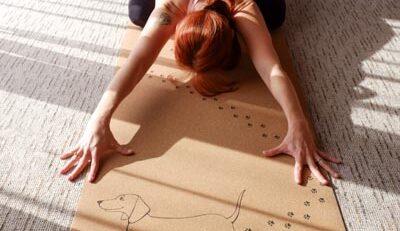
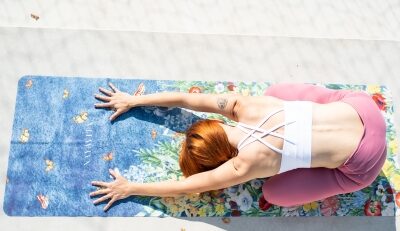
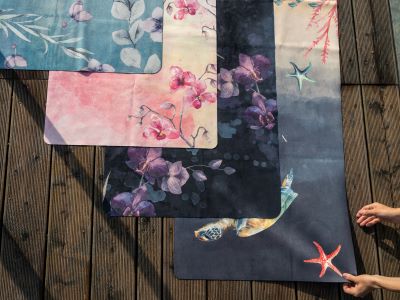
That’s why, at NAYAVITA Yoga, aesthetics are just as essential as quality, functionality, and sustainability. Each NAYAVITA designer yoga mat is crafted from eco-friendly materials and decorated with hand-illustrated designs created with intention — to inspire, calm the mind, and deepen focus. Some motifs energise your practice, while others invite introspection and stillness. This harmony between art and purpose helps create the visual balance that is so crucial in yoga.

Psychology of colours and patters in yoga mats
Scientific research confirms that colours and visual elements directly influence our emotions and focus. For example, a study in the Journal of Environmental Psychology (Kaplan & Kaplan, 1989) found that harmonious environments reduce stress, improve mood, and enhance concentration.
Colours such as blue and green evoke calm and balance, while strong contrasts or intense reds stimulate the nervous system and increase inner tension (Kaya & Epps, 2004). In yoga, where we aim to slow down and connect with the breath, balanced and natural colour palettes are most effective.
Furthermore, these principles align closely with traditional philosophies such as Feng Shui, which emphasises the importance of colour and space balance in achieving harmony. According to Feng Shui, well-chosen shades and patterns can harmonise the energy of a space and positively influence both mental and physical wellbeing — something deeply relevant to yoga practice.
You might like: Psychology of colours – meaning of colours and prints by Feng Shui.
The designer yoga mat as a visual anchor for the mind
During yoga, our gaze often rests on the mat itself. This makes your designer yoga mat a visual anchor — a point that helps bring your focus back whenever your mind starts to wander.
At NAYAVITA Yoga, we design mats with nature-inspired, hand-drawn illustrations that infuse your practice space with peace and balance. Inspired by the shapes of leaves, soft floral lines, and grounding earthy tones, our designs evoke calm through simplicity. As studies in Frontiers in Psychology (2015) show, natural visual elements lower cognitive load and help maintain concentration longer than chaotic visuals. Thus, natural motifs can help you reconnect with your inner rhythm and stay fully present during practice.
Aesthetics as motivation: design that invites you to practice
A yoga mat that visually inspires you can act as a daily invitation to move. According to a Journal of Consumer Research study (Townsend & Sood, 2013), people are more motivated to engage in activities that are aesthetically pleasing — simply because they look forward to the experience.
When your designer yoga mat reflects your personality and resonates with your inner world, you’re more likely to practise regularly and with joy. It becomes a ritual you anticipate — transforming discipline into desire and routine into self-care.
Minimalism vs. visual overload
Too many visual stimuli can have the opposite effect. Research in neuroaesthetics (Hekkert, 2006) warns that complex, busy patterns can lead to mental fatigue. The brain uses more energy to process excessive detail, leaving less capacity for mindfulness, breath, and body awareness.
For high-intensity workouts, vibrant patterns may not be an issue, but for restorative or yin yoga, overly busy designs can be distracting. That’s why NAYAVITA Yoga follows strict aesthetic principles in every design. Some mats are intentionally more energising, while most use soft, balanced colour combinations and thoughtful layouts to support focus and serenity rather than visual clutter.
In short, the more balanced and harmonious the design, the calmer the mind — and the deeper your yoga practice.

NAYAVITA Yoga: Designer yoga mats with a soul
At NAYAVITA Yoga, we believe that design goes far beyond aesthetics. It’s a tool for mindfulness and motivation — a way to energise or quiet the mind and stay present on the mat. Every illustration carries symbolism, emotion, and intention. Our designs are never random; they are crafted with awareness of how visuals affect both your environment and your state of mind.
At the same time, we ensure that each eco-friendly designer yoga mat remains ethical, durable, and highly functional. True inner peace comes when everything is in balance — from materials and design to the values behind them. Our mats and accessories create a space that nurtures both your body and spirit.

Conclusion: aesthetics as a path to inner calm
The design of your yoga mat isn’t just a decorative detail — it’s a psychological tool that shapes your experience, focus, and emotional state. Colours, textures, and patterns all influence how you feel and move. As an ancient yogic saying reminds us: “The space you move in becomes part of your movement.”
Choose a designer yoga mat that resonates with your energy — one that supports both your body and mind. When your surroundings inspire peace and beauty, your practice naturally follows.
References:
-
Kaplan, R., & Kaplan, S. (1989). The Experience of Nature: A Psychological Perspective. Journal of Environmental Psychology.
-
Kaya, N., & Epps, H. H. (2004). Relationship between Color and Emotion. College Student Journal.
-
Townsend, C., & Sood, S. (2013). Self-Affirmation Through the Choice of Highly Aesthetic Products. Journal of Consumer Research.
-
Hekkert, P. (2006). Design aesthetics: Principles of pleasure in design. Psychology Science.
-
Vartanian, O. et al. (2015). Neural correlates of aesthetic preference for real-world scenes. Frontiers in Psychology.