

New year yoga: a gentle and sustainable way to return to movement
The new year is traditionally a time of change. People look for ways to lose weight, start exercising, return to movement after the holidays, and set sustainable new year’s resolutions.
This is exactly where new year yoga finds its place – not as a performance goal, but as a gentle and realistic beginning.
Instead of extreme plans, yoga offers a return to the body, the breath, and inner balance. That is why it remains one of the most searched forms of movement in January.

Why new year yoga is ideal after the holidays
After the holidays, the body is often tired, stiff, and out of routine. And yet, we tend to place high expectations on ourselves right away.
New year yoga takes the opposite approach – it respects your current physical and mental state and helps you return to movement without pressure or frustration. It’s no coincidence that phrases like new year yoga, yoga in January, and how to start exercising after the holidays become especially popular at this time of year.
Unlike many other forms of exercise, yoga is not based on competition or performance. It’s not about pushing harder, but about staying connected to yourself. Yoga supports natural movement, helps reduce stress and tension, improves awareness of breath and focus, and supports long-term mental wellbeing.
That’s why yoga is one of the most sustainable health-focused new year’s resolutions – and one that works far beyond January.
How to start moving in the new year gently and sustainably
If you’re wondering how to start exercising in the new year, try a simple approach:
- short practice instead of long sessions
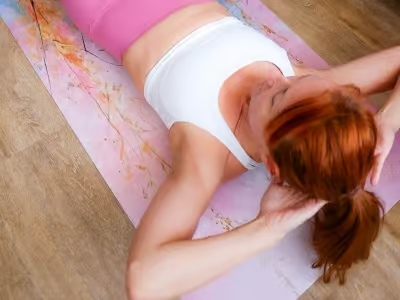
- simple postures focused on release and gentle stretching
- mindful breathing instead of pressure for results
Even 10 minutes of yoga at home can be more beneficial than an ambitious plan that only lasts a few days.
Yoga at home in January: a natural return to movement after the holidays
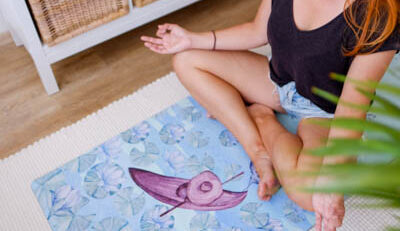
If you have practised yoga before, yoga at home in January is a very natural way to return to movement after the holidays. You move without commuting, in the comfort of your own home, at a pace that matches your energy – without group pressure or performance expectations.
A home practice allows you to stay connected to movement even during periods when you don’t feel ready to attend studio classes or manage schedules and logistics.
If you are a complete beginner and have never practised yoga before, it’s important to have at least some basic orientation – not for perfect poses, but for confidence and safety.
That’s why it helps to first understand how yoga works and what to expect. Introductory video classes, for example on YouTube, can be a supportive starting point. You can also read our dedicated article Yoga for beginners, where you’ll find everything you need for your first orientation and a calm, confident start.

How much yoga is enough at the beginning of the year
A common question is: How much should I practise for it to make sense?
The answer is simple – less, but regularly.
Especially if December involved very little movement, rebuilding a routine gradually makes a real difference.
For new year yoga, an ideal rhythm is:
-
5–10 minutes daily or every other day
-
a gentle morning or evening practice
-
focus on release and mobility rather than performance
This approach is realistic, sustainable, and allows you to increase time and intensity naturally – without giving up.
Why gentle yoga is a natural choice in winter
Winter is associated with lower energy and a natural need to slow down. Nature rests and regenerates – and the most supportive thing we can do is to align with that rhythm.
Gentle yoga supports recovery, helps manage stress, improves body awareness, and encourages regular movement. That is why yoga in January feels so accessible and widely appealing.
At Nayavita Yoga, we believe yoga should support long-term balance. It’s not about starting as intensely as possible, but about starting in a way that allows movement to stay with you.
Yoga should be a source of support – not another form of pressure.
In conclusion: the new year as a return to yourself
The new year doesn’t have to mean a radical reset.
It can mean a gentle return – to movement, to the body, and to the breath.
That’s why new year yoga holds such a natural place: as a sustainable beginning that makes sense today and months from now.