

Yoga for back pain – 5 effective poses to strengthen your spine and relieve tension
When I was 16, I was diagnosed with scoliosis. At first, I didn’t think much of it — my back didn’t hurt, I was active, and I assumed it wasn’t a big deal. However, over the years, the pain started to appear, especially after sitting or standing for long periods. Eventually, a friend suggested yoga. At first, I was skeptical, but soon I learned that yoga for back pain is one of the most effective, holistic ways to strengthen the body and relieve tension naturally.
Unlike targeted back exercises that focus only on specific muscles, yoga works on the entire body, improving balance, flexibility, and strength — especially around the spine. As a result, with consistent practice, my back gradually became stronger, and the pain disappeared completely.
A few years later, when I had to stop practicing due to a knee injury, the back pain returned within weeks. Once I resued regular yoga sessions, my body found balance again. This personal experience perfectly illustrates how yoga can both prevent and relieve back pain. So, let’s explore how it works and which yoga poses are the most effective exercises for a healthy, strong back.

How yoga helps with back pain
Yoga isn’t just about stretching — it’s a comprehensive body-mind practice that strengthens and balances muscles often neglected by conventional workouts. By activating the deep core and back muscles, yoga not only relieves but can even eliminate chronic back pain. Here’s why yoga for back pain is so effective:
1. Strengthening the deep core stabilizers
Yoga activates the deep abdominal and spinal muscles that support proper posture and keep the spine aligned. in fact, this deep stabilizing system — often referred to as the body’s internal “corset” — is essential for maintaining a healthy back and preventing pain. By strengthening these muscles, you reduce pressure on vertebrae and help the body move efficiently in daily life.
2. Improving mobility and spinal flexibility
Moreover, regular yoga practice releases tension in the spine and surrounding muscles, improving flexibility, mobility, and posture. Gentle movements and controlled stretching help increase the range of motion, restore balance in the muscular system, and promote natural spinal alignment. This reduces stiffness and supports overall back health.
3. Enhancing body awareness
One of yoga’s unique benefits is developing mindful body awareness. Through focused breathing and movement, yoga teaches you to recognize tension, prevent overexertion, and move with control and balance. This self-awareness helps prevent injuries and supports long-term spine health.
4. Supporting breath and mental well-being
Deep breathing in yoga activates the parasympathetic nervous system, which relaxes the body and reduces stress — a common trigger for muscle tightness and back pain. Mindful breathing increases oxygen flow to tissues, improves circulation, and promotes relaxation in both body and mind, leading to less pain and greater overall comfort.
As a result, yoga doesn’t just treat the symptoms of back pain — it addresses the underlying causes by restoring stability, flexibility, and calm to the entire body.

5 most effective yoga poses for back pain relief
Here are my five favorite yoga poses for back pain relief — gentle yet powerful movements that help keep your spine strong, flexible, and pain-free.
1. Sun salutation (Surya Namaskar)
The Sun Salutation isn’t a single pose but a flowing sequence that engages the entire body. It strengthens not only the back muscles but also the core, which is crucial for spinal support and balance. This dynamic flow helps mobilize the spine, improve blood circulation, and enhance overall flexibility.
Regular practice of Sun Salutations promotes a healthy, resilient spine and prevents back pain by activating both stabilizing and supportive muscles throughout the body.
2. Cat–cow oose (Marjaryasana / Bitilasana)
This simple yet highly effective movement is perfect for mobilizing the spine and releasing tension in the back muscles. The alternating motion of arching and rounding the back improves flexibility, lubricates the intervertebral discs, and helps correct posture.
Move slowly with your breath — inhale into Cow (arch the spine) and exhale into Cat (round the back). If your body calls for additional movement, such as gentle side bends or circular motions, follow your intuition — that’s part of yoga’s mindful flow.
3. Bridge pose (Setu Bandhasana)
Bridge Pose directly strengthens the lower back, glutes, and pelvic region, which are key areas for maintaining a strong and functional spine. It opens the chest, improves posture, and relieves lower back tension.
Lie on your back with knees bent and feet hip-width apart. Keep your arms by your sides, palms down. Press into your feet as you slowly lift your hips, engaging your glutes and lower back. Draw your belly in slightly to stabilize your core. Keep your shoulders and head grounded, with the neck relaxed.
Bridge Pose also works as a rehabilitative exercise, gently activating weakened muscles and stretching tight areas that often contribute to back pain.
4. Cobra pose (Bhujangasana)
Cobra Pose strengthens the upper back and opens the chest, helping counteract the rounded shoulders and poor posture common in modern life. With regular practice, it enhances spinal flexibility and reduces tension in the shoulders and neck.
Lie face down with legs extended and tops of the feet pressing into the mat. Place your palms under your shoulders, elbows close to your body. Slowly lift your chest while keeping the lower ribs, hips, and pelvis grounded. Draw your shoulders back and down, away from your ears. Avoid overextending — focus on length and control rather than height.
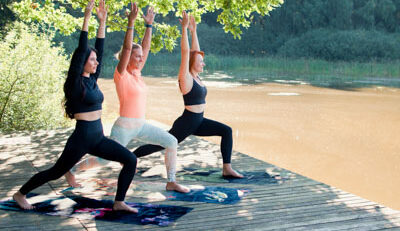
5. Warrior I and II (Virabhadrasana I & II)
The Warrior poses build stability, strength, and endurance — essential for a healthy back and proper posture. They strengthen the legs, core, and spinal muscles, improving balance and helping to release chronic tension.
For Warrior I, stand tall and step one foot back. Bend your front knee to a 90° angle, keeping the back leg straight and heel pressing into the ground. Face your hips and chest forward, lift your arms overhead, and engage your core for support.
Transition into Warrior II by widening your stance and opening your hips to the side. Keep your front knee bent at a right angle, back leg straight, and arms extended horizontally. Gaze softly over your front hand. These strong, grounded poses activate deep stabilizing muscles along the spine while encouraging focus and inner strength.
Conclusion: yoga for back pain works – all it takes is consistency and patience
If you struggle with back pain — whether from long hours of sitting, poor posture, scoliosis, or muscle imbalances — know that yoga can become your long-term ally. While yoga for back pain isn’t a substitute for physical therapy, it incorporates gentle, effective poses that engage the entire body and support your spine on multiple levels.
Yoga helps strengthen deep stabilizing muscles, improve spinal mobility, and restore balance between strength and flexibility. Over time, this holistic approach not only alleviates pain but also helps prevent it from returning.
Practices like Sun Salutation, Cat–Cow, Bridge, Cobra, and Warrior I & II are among the most effective yoga poses for back pain relief. With regular practice, you’ll likely experience greater vitality, improved posture, reduced tension, and a stronger “core armor” that protects your spine every day.
Remember, yoga for the back isn’t about instant results — it’s about steady care, awareness, and connection between body and mind. So roll out your mat, move with intention, and give your back what it truly deserves: movement, mindfulness, and compassion.