

Yoga mat: history from ancient practice to sustainable design
The yoga mat, today an essential part of every practice, has gone through an impressive evolution. From natural surfaces like soil and grass to high-tech sustainable solutions, yoga mats have adapted to the development of yoga, the availability of materials, and the needs of practitioners. Sometimes referred to as an exercise mat, the yoga mat has become more than just equipment. It represents lifestyle, wellness, and responsibility towards the planet.
Ancient times: practicing without mats (5000 BCE – 1500 BCE)
At the very beginning, yogis practiced directly on the ground. Whether it was stone floors, soil, or sand, there was no protective layer. This strengthened the connection with nature, but offered little comfort or insulation from the cold and uneven surface.

Animal skins and woven mats (1500 BCE – middle ages)
As yoga evolved, practitioners began using animal skins such as tiger or deer, which were considered sacred and offered better stability. In some cultures, woven textiles were introduced, providing basic traction and insulation from hard floors.
Early 20th century: cotton rugs for better grip
In India, thin cotton rugs became popular for yoga. Lightweight and portable, they improved traction but lacked cushioning. These simple mats were precursors of what we know today as the yoga mat.

1960s: the PVC revolution
In the 1960s, yoga teacher Angela Farmer discovered that PVC flooring material offered excellent grip and stability. This innovation gave birth to the first commercial yoga mats, which quickly became standard across the Western world.
1990s: mass production of PVC yoga mats
By the 1990s, PVC mats were mass-produced, making yoga more accessible. Affordable, durable, and sticky, they spread worldwide. However, concerns soon grew about their environmental impact, as PVC is non-biodegradable and toxic. Some companies still produce exercise mats from PVC even today.
Early 21st century: diversification of materials
With rising awareness of ecology and health, alternatives to PVC emerged. Natural rubber, cork, and TPE (thermoplastic elastomer) became popular, offering non-toxic, biodegradable options with excellent grip. At the same time, cheap foam exercise mats entered the market, often less durable and with poorer traction, negatively affecting practice quality.
Today: design, sustainability, and function in harmony
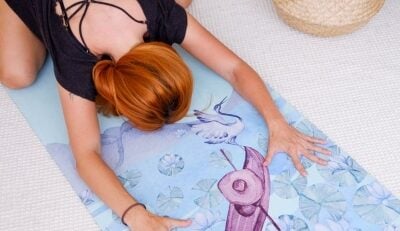
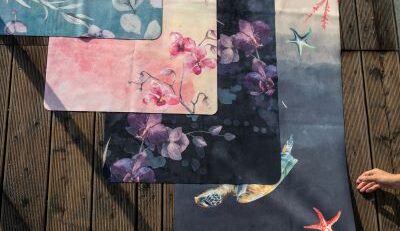
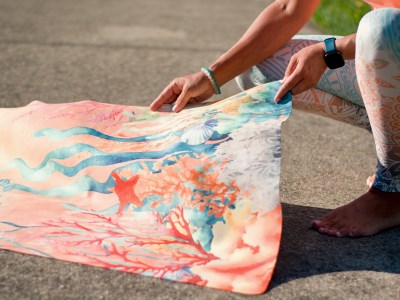
The modern yoga mat is more than a practice surface. While low-quality foam mats still exist, the trend is moving towards sustainable, stylish, and functional designs. At NAYAVITA Yoga, we create eco-friendly yoga mats and accessories from recycled and natural materials. Each piece is thoughtfully designed to support both your body and the environment. By upcycling plastic waste, we also help clean our planet.
Future: smart and regenerative yoga mats
The future of yoga mats is moving towards regenerative and intelligent solutions. Imagine mats that self-clean, adjust their texture to the type of exercise, or even track your practice through built-in sensors. At NAYAVITA, we believe that design, sustainability, and functionality will continue to go hand in hand.
Conclusion
The yoga mat has evolved from simple ground and animal skins to high-tech eco-friendly designs. Today, it is more than just a tool – it is a reflection of mindfulness, lifestyle, and responsibility. Which yoga mat will you choose for your journey?
You might like: How to choose a yoga mat.