

SUP yoga: a new trend connecting yoga and the water world
Are you a fan of active relaxation and new challenges? Then SUP yoga might be the perfect addition to your routine. As the name suggests, SUP yoga combines yoga with paddleboarding. This relatively new trend is a fantastic way to stretch, strengthen your body, and work on your balance – all while enjoying fresh air and beautiful weather outdoors.
Let’s take a closer look at what SUP yoga is, where it comes from, its benefits, who it’s suitable for, what equipment you need, and how to get started.
You may also like: 7 reasons to practise yoga in nature.
What is SUP yoga?

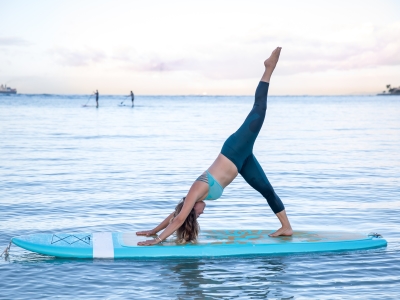
SUP yoga stands for Stand Up Paddleboard Yoga. This new trend combines yoga postures, meditation, and breathing techniques performed on a paddleboard over water. During practice, you perform familiar yoga poses such as Downward Dog, Tree Pose, or Warrior, but this time on an unstable board. The paddle acts as a stabiliser and helps you balance the body.
The key element is that the practice takes place on moving water, which adds a completely new dimension, improves concentration, and strengthens stabilising muscles.
Where does SUP yoga come from?
SUP yoga has its roots in Hawaii, where paddleboarding first developed as a wave activity. Later, people began experimenting with yoga postures on paddleboards. At the beginning of the 21st century, this trend spread worldwide. Today, SUP yoga blends a popular water activity with calming yoga movements, creating a truly unique experience.
Benefits of SUP yoga
SUP yoga brings whole range of benefits for body and mind:
- Improves balance and stability – practising on water requires continuous balance since the board is always moving. This enhances coordination and flexibility.
- Strengthens the whole body – combining yoga and paddleboarding activates the entire body, especially the core, legs, and shoulders, while engaging stabilising muscles crucial for posture.
- Reduces stress – exercising on open water has a soothing effect. The calmness of water and connection with nature support relaxation and mental well-being.
- Boosts flexibility – yoga poses on water increase range of motion and flexibility.
- Connects you with nature – spending time in natural surroundings has a positive effect on mental health, encourages calmness, and improves focus.
Who is SUP yoga for?
SUP yoga is suitable for a wide range of people, regardless of whether you are a beginner or an experienced yogi. Although practising on water requires some physical endurance, SUP yoga is often recommended for newcomers who are curious about yoga or paddleboarding.

- Yoga beginners – a gentle introduction to yoga in a relaxing and scenic environment.
- Nature lovers – a perfect way to combine outdoor time with sport and relaxation.
- Athletes and active individuals – ideal if you enjoy challenges and want to build balance, coordination, and stability.
- Those seeking relaxation – SUP yoga can be deeply calming and meditative, helping to relieve stress and restore inner peace.
You might like: 8 reasons you should start with yoga today a 10 tips to prepare for your first yoga class.
What do you need for SUP yoga
To start with SUP yoga, you need a few key things:
- Paddleboard (SUP) – awider, more stable paddleboard designed for yoga to allow comfortable practice of poses.
- Paddle – essential for movement on water and useful as a stabiliser during practice.
- Comfortable clothing – sportswear or swimwear that allows free movement without restriction.
- Safety equipment – on open waters, always use safety gear such as a life jacket.
- Instructor-led class – beginners benefit from lessons with a qualified instructor to learn safe technique and board control.
How to start with a SUP yoga?
- Start on a yoga mat – if you’re new to yoga, first get familiar with basic poses and breathing on solid ground.
- Find a good spot – calm waters such as lakes, quiet rivers, or sheltered bays are ideal. Avoid windy spots or heavy boat traffic.
- Take a class – if you’re new to paddleboarding, join a guided session to learn how to stand on the board, use the paddle, and gradually add yoga poses.
- Don’t be scared to fall – falling is part of the process when learning balance. The water provides a soft landing, so stay patient and enjoy the learning curve.
- Practice regularly – like any type of yoga, consistency is key. Start with simple poses and build up gradually.
- Enjoy the environment – SUP yoga is not only exercise but also a way to connect with nature, focus on your breath, and stay present.
SUP yoga is a fantastic way to enrich your yoga routine or add a new dimension to paddleboarding. It’s a fun activity that connects you with nature while improving physical strength, balance, and mental calm. Whether you are a beginner or an experienced yogi, SUP yoga opens the door to practising in a fresh environment and taking your journey to the next level.